
We protect the brain from stroke effects
Simply by making its vascularisation more stable
Why Acute Ischemic Stroke?

High disease burden
Stroke affects approximately 12 million people each year worldwide. More than 7.5 million suffer from ischemic stroke - a condition in which blood flow to part of the brain is blocked, usually by a clot, so that brain cells do not get enough oxygen and nutrients and begin to die. It remains a leading cause of death and long-term disability, with global stroke-related costs projected to rise from about $891 billion in 2020 to $2.3 trillion by 2050.

Limited treatment access
The main approved thrombolytic treatment must be given rapidly after symptom onset, with guideline-based use generally limited to selected patients within 4.5 hours. In practice, only a minority of patients receive acute reperfusion therapy because many arrive too late or lack access to specialized stroke infrastructure.

Reperfusion injury
Even when reperfusion is achieved, vascular injury remains a major clinical challenge. The current treatment reports symptomatic intracranial hemorrhage within 36 hours in 6.4% of treated acute ischemic stroke patients, compared with 0.6% in placebo-treated patients.
Our solution

German academic roots
NovInCell arises from research at Leibniz-Forschungsinstitut für Molekulare Pharmakologie and Charité Berlin.

Novel vascular protection
Our small molecules stabilize the brain’s vasculature and help reduce reperfusion-driven injury in stroke.

NIC-001
Our lead stage small molecule inhibitor early preclinical candidate
Our selective PI3KC2β inhibitor (NIC-001) preserves vascular integrity during acute ischemic stroke.

Platform expansion
Selective PI3KC2β inhibition shows promise in rare neuromuscular disease models expanding NovInCell’s future therapeutic indication pipeline.
Our drug NIC-001 characteristics
Target biology
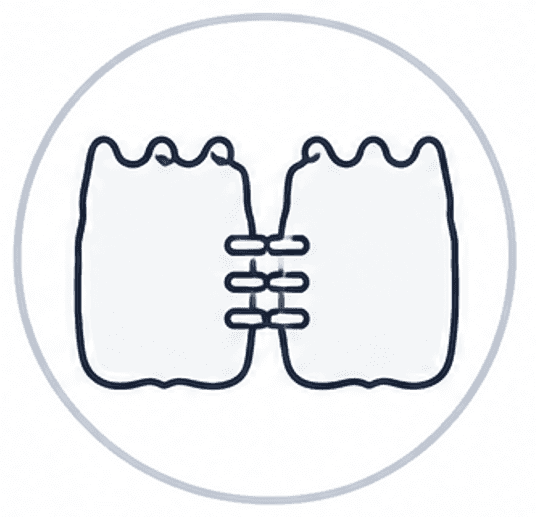
Activation of PI3KC2β impairs endothelial junction stability under stress.

Molecule profile
Selective small molecules with nanomolar activity and outstanding selectivity.

Preclinical proof of principle
Exploratory in vivo studies provided an encouraging efficacy signal, with reduced MRI-measured infarct volume following pharmacological PI3KC2β inhibition.
Awards
NovInCell Therapeutics is the winner of the Alnylam Scientific Excellence Award at the Nucleate Germany Activator Program 2025, selected from more than 200 early-stage biotech ventures across Germany


Our differentiated vascular strategy for stroke
Our Unique Approach: Current stroke therapies primarily focus on restoring blood flow through thrombolysis or mechanical thrombectomy, while many investigational therapies attempt to protect neurons by agents that need to cross the blood-brain barrier. Despite decades of research, these approaches have delivered only limited improvements beyond today’s standard of care.
NovInCell is pursuing a fundamentally different therapeutic strategy.
Instead of targeting the clot or the neurons directly, our selective PI3KC2β inhibitor is designed to reinforce the brain’s vascular system during the most critical phase of stroke: reperfusion. By stabilising the endothelial cell junctions that line cerebral blood vessels, our approach aims to preserve blood-brain barrier integrity, reduce vascular leakage and increase the brain’s resilience to secondary injury.
Stronger endothelial junctions create a more stable vascular barrier, helping protect brain tissue when it is most vulnerable.
Because our approach acts at the vascular interface rather than inside the brain, it does not rely on crossing the blood-brain barrier. This creates a differentiated therapeutic strategy that has the potential to be used either as a standalone treatment or alongside current standards of care such as thrombolysis and mechanical thrombectomy.

Meet our team
Dr. Charles Malek
Co-founder and Chief Executive Officer of NovInCell Therapeutics. He holds a PhD in Molecular and Cellular Biology and an Executive MBA, bringing together scientific innovation and business strategy. With over 10 years of experience in translational research and the life sciences industry, he leads NovInCell’s corporate strategy, financing, partnerships, and commercialization efforts, driving the development of first-in-class therapies for acute ischemic stroke.


Prof. Volker Haucke
Co-founder and Chief Scientific Officer of NovInCell Therapeutics. He is Director of the Leibniz Forschungsinstitut für Molekulare Pharmakologie (FMP) and Professor of Molecular Pharmacology at Freie Universität Berlin. An internationally recognized leader in phosphoinositide signaling and membrane biology, his research laid the foundation for NovInCell’s PI3KC2β platform. He has authored more than 270 scientific publications in leading journals, including Nature, Science, and Cell, and has received numerous prestigious awards, including the 2025 Gottfried Wilhelm Leibniz Prize, Germany’s highest scientific honor.
Prof. Marc Nazaré
Co-founder and Chief Medicinal Chemist of NovInCell Therapeutics. A Professor of Medicinal Chemistry at the Leibniz Institute for Molecular Pharmacology (FMP), he is an internationally recognized expert in small-molecule drug discovery. He has contributed to multiple drug candidates that advanced into clinical development, authored over 90 scientific publications, and is an inventor on more than 50 patents. At NovInCell, he leads the design and optimization of the company’s first-in-class PI3KC2β inhibitor program.


Prof. Christoph Harms
Co-founder and Chief Clinical Officer of NovInCell Therapeutics. He is Professor of Experimental Neurology at Charité – Universitätsmedizin Berlin and an internationally recognized expert in stroke research. He has authored over 100 peer-reviewed scientific publications and has extensive experience in translational neuroscience and the development of novel therapies for neurological disorders. At NovInCell, he leads the clinical translation of the company’s first-in-class PI3KC2β inhibitor program for acute ischemic stroke.
Get in Touch
Partner, invest, or collaborate
We welcome discussions with investors, pharmaceutical partners, and translational collaborators interested in neurovascular therapeutics and PI3KC2β biology.